


Reliable gas infrastructure is one of those things nobody notices until it's missing.
For a modern housing society, apartment complex, commercial development, or institutional project, reliable utility infrastructure can play an important role in occupancy readiness, convenience, functionality, and long-term project value.
Yet many developments in Pakistan sit beyond the conventional natural-gas network, or face uncertainty about when — or if — that network will eventually reach them.
When this happens, developers and consumers need a structured alternative that can provide centralized fuel management and pipeline-based distribution without depending entirely on conventional network expansion.
The Infrastructure Gap
When a development does not have access to a conventional gas network, individual consumers may have to manage their own fuel requirements.
This can result in:
- Individual LPG cylinders
- Repeated cylinder replacement
- Decentralized fuel storage at individual premises
- Variable fuel availability
- Unstructured supply arrangements
- Limited consumption monitoring
- Greater fuel-handling requirements
- Limited centralized operational support
None of this is necessarily the result of poor planning by an individual household or business. It is often simply the consequence of a development existing outside formal gas-utility coverage.
For a large housing society or commercial project, however, managing these arrangements individually can become increasingly difficult as the number of consumers grows.
The Centralized Alternative
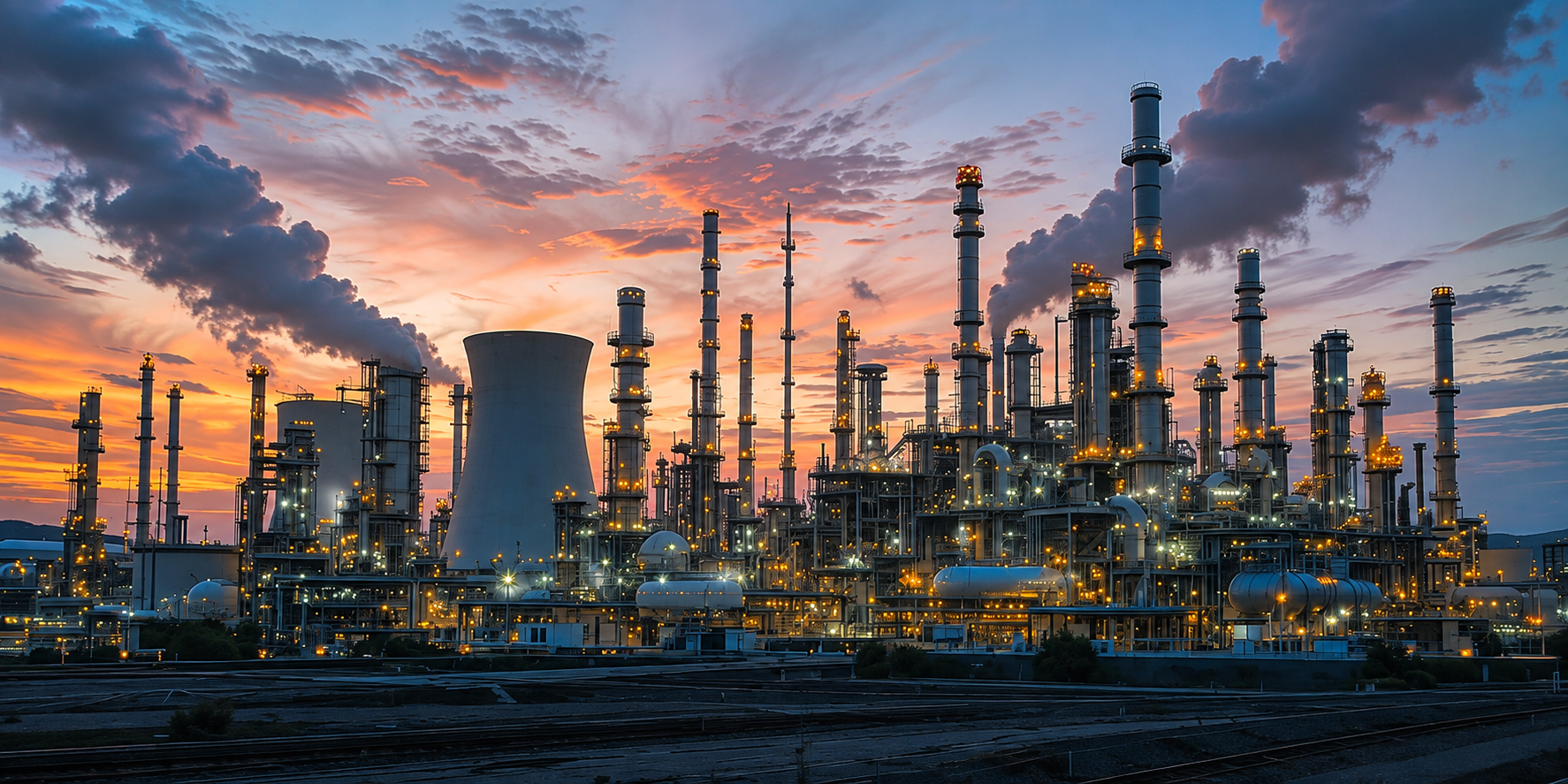
SNG Distribution Company's model addresses this infrastructure gap through an SNG Grid — a centralized facility where LPG is received and stored before being processed for distribution through the project's gas network.
Within the system, LPG is managed through controlled processes that can include vaporization, air mixing, pressure regulation, and distribution through an underground pipeline network.
From the central facility, the gas is distributed through main pipelines, branch pipelines, and individual service lines to approved consumer premises.
Each eligible connection can have its own dedicated service line and meter, allowing consumption to be measured and billed according to the applicable project arrangement.
From Centralized Fuel Management to Individual Connections
The difference is not simply where the LPG is stored.
A managed utility model brings several functions together into one coordinated system.
Centralized Fuel Management
Instead of individual consumers arranging and storing fuel separately, LPG can be received, stored, and managed through a designated central facility.
Pipeline Delivery
Gas is distributed through an engineered pipeline network rather than requiring consumers to repeatedly transport and replace individual cylinders.
Individual Metering
Approved consumers can have dedicated meters that allow consumption to be recorded at the individual connection level.
Consumption-Based Billing
Meter readings can form the basis of consumption-based billing under the applicable commercial and contractual arrangements.
Professional Operations and Maintenance
The system can be operated and maintained through structured technical procedures, inspections, preventive maintenance, and operational support.
Technical and Emergency Support
A centralized operating model also provides a defined framework for technical assistance, system monitoring, maintenance, and emergency response.
Why Centralization Matters
Centralization becomes particularly important as a development grows.
- Consumer population
- Residential and commercial demand
- Pipeline routes
- Storage requirements
- Pressure requirements
- Development phases
- Metering arrangements
- Operational requirements
- Maintenance needs
The objective is to create a coordinated utility system rather than leaving each individual consumer responsible for managing the complete fuel-supply process.
A Utility Built Around the Development
For developers, gas infrastructure is not simply another construction component.
Utility availability can influence how quickly a development becomes operational, how convenient it is for residents and businesses, and how the project is perceived by prospective occupants.
A properly planned gas distribution system can therefore become part of the development's overall utility infrastructure.
Instead of treating gas as an individual consumer responsibility, the developer can work with a utility operator to establish an integrated system covering infrastructure, fuel management, distribution, metering, billing, operations, and maintenance.

What This Means for Consumers
For residents and businesses, the difference can be straightforward.
Instead of thinking about where the next cylinder will come from, how it will be transported, or where it should be stored, the consumer interacts with a utility-style distribution system.
Gas reaches the premises through the network, consumption is measured through the applicable meter, and billing is managed through the established consumer account system.
The infrastructure therefore becomes part of the background of everyday life — much like other essential utilities.
What This Means for Developers
For developers, the value extends beyond convenience.
- Occupancy readiness
- Project utility planning
- Consumer convenience
- Project marketability
- Individual consumer metering
- Centralized fuel management
- Phased infrastructure development
- Long-term operational support
Most importantly, the developer does not have to approach the project as a collection of disconnected fuel-related tasks.
The infrastructure can instead be developed as an integrated utility system designed around the project's actual requirements.
Closing the Gap
Pakistan's growing residential, commercial, and institutional developments will continue to require reliable utility infrastructure.
Where conventional natural-gas network coverage is unavailable or uncertain, the answer does not necessarily have to be a collection of individual fuel arrangements.
A properly designed and managed SNG distribution system can provide another pathway — bringing centralized LPG management, controlled gas processing, underground pipeline distribution, individual metering, billing, operations, and maintenance together within one coordinated model.
For developments beyond the conventional network, that can mean moving from individual fuel management to managed utility infrastructure.
And that is ultimately how the infrastructure gap begins to close.
Planning a Development Beyond the Conventional Gas Network?
Explore how SNG Distribution Company can help assess, develop, connect, and operate a managed gas utility system for your project.
Discuss Your Project →